Bolivian food follows the altitude. In the Andes and on the Altiplano the plate is built on potatoes, rice, quinoa, corn and meat. In the tropical lowlands around Santa Cruz, rice, yuca and plantain take over. The roots are Spanish, Quechua and Aymara. So the useful question is not what Bolivians eat. It is where you are, and what time it is.
Start with the salteña, a baked empanada whose filling is half stew: meat, potato and ají (chili) in a broth that keeps it hot inside the crust. Bolivians buy them from street stalls and eat them in the mid-morning, usually with a cold drink. That is the salteña hour.
The name points to Salta, in Argentina. Potosí writer Juan José Toro Montoya traces it instead to colonial Potosí and a recipe book from 1776. Either way, the salteña is Bolivian.
The silpancho takes its name from the Quechua sillp’anchu, “flattened and thin”: a round of beef pounded thin, breaded and fried, laid over rice and fried potatoes, then topped with a fried egg and a salad of tomato, onion and locoto, the local hot pepper.
Pique a lo macho is a heap of chopped beef and chorizo over potatoes or fries, with onion, tomato and sliced locotos. It began as a late-night plate for drinkers, and the locotos were there to make you thirstier. In 2019 it won a public vote as Cochabamba’s most representative dish. Order one for the table. The city’s other pride is chicharrón, deep-fried pork, declared municipal heritage in 2021 together with chicha.
Sajta de pollo is chicken in a sauce of dried yellow chili, served with potatoes and chuño or tunta, the freeze-dried potatoes explained below. The plato paceño is La Paz on one plate: meat, cheese, potatoes, broad beans and corn. The sándwich de chola is roast pork leg with crackling, pickled vegetables and ground red chili in bread, created by the cholas, women in wide pollera skirts.
After dark, look for small sidewalk grills. Anticuchos are thin slices of beef heart on skewers, served with potatoes and a spicy peanut and ají sauce. Our La Paz tours show you the city by day. The anticucho is your evening.
The dish of Santa Cruz is majao, often called majadito: rice cooked with shredded charque (dried beef) and colored with urucú (annatto), served with a fried egg and fried plantain. A 2021 survey by the Santa Cruz statistics institute found that 97% of those surveyed in the metro area eat it, and 98% eat cuñapé, a small bake of cheese and yuca flour.
There is no single answer. In 2018 Bolivia’s chefs’ association, with the Minister of Cultures, proposed sopa de maní as the country’s flag dish: a peanut soup with beef broth and potatoes, plus pasta, rice or yuca depending on the region. It was a proposal, not a law. The regions answer for themselves: Cochabamba voted for pique macho, and Santa Cruz’s survey puts majao on top. Our advice: eat each region’s answer in its own region.
Bolivia’s agricultural research institute, INIAF, had collected more than 1,800 types of potato by 2018. The most Andean potato is not fresh at all. Chuño and tunta are potatoes left to freeze in the highland night and dry in the sun by day, a method Andean farmers have used for 2,000 to 3,000 years. Chuño comes out black, tunta white.
Quinoa is older still: the FAO dates its cultivation back more than 7,000 years. Until recently Bolivian cities looked down on it as a food only of the Aymara, as Evo Morales said in 2013. Then the rest of the world found it, and Bolivia’s harvest more than tripled between 2006 and 2013.
Altiplano mornings are cold, and api is the answer: a hot, thick, sweet corn drink, often made with purple corn (api morado) and spiced with cinnamon and cloves. It comes with something fried, a buñuelo (fritter) or a cheese pastry.
Mate de coca, tea made from coca leaves, is Bolivia’s best-known herbal tea. Drink it in Bolivia and leave it there: the US DEA lists coca leaves as a Schedule II controlled substance. For the altitude itself, read our Bolivia staying-healthy guide.
Chicha is Cochabamba’s drink, a thick, mildly alcoholic corn beer. There are several kinds: yellow corn is the base, and festive versions use purple corn, quinoa or amaranth. A white flag or a bunch of flowers on a pole outside a door means chicha for sale. Its golden age is over: by 2024 barely 3,000 of the department’s 84,000 tons of corn went into it. Santa Cruz’s chicha camba is another drink: cornmeal boiled with cinnamon and cloves, sweetened and drunk cold.
In the lowlands the cold drink is mocochinchi, dried peaches simmered, sweetened and served cold with the fruit in the glass. The major cities have their own breweries, mostly German-style lager.
Singani is Bolivia’s grape brandy, distilled from white Muscat grapes and produced in the Andes between 5,250 and 9,200 feet. A 1992 law makes the name a denomination of origin: singani must be produced and bottled in set valleys of Tarija, Chuquisaca, La Paz and Potosí. Since 2023 US rules also recognize it as a distinctive product of Bolivia.
Bolivia’s main vineyards are in Tarija, mostly between 1,600 and 2,000 meters and some close to 3,000, growing Cabernet Sauvignon, Malbec, Tannat and Muscat of Alexandria among others. Our Bolivia wine tours take you to Tarija.
In practice, the drinking age in Bolivia is 18. The 2012 alcohol law (Ley 259) bans the sale of alcohol to anyone under 18, and sellers must ask for ID. It also bans drinking on public streets, in public recreation areas and at sports events. Keep the open bottle off the plaza.
The CDC advises against tap water where it might be contaminated: choose factory-sealed drinks and skip the ice. Tea served steaming hot is considered safe, so the morning mate de coca is fine. Vaccines are in the staying-healthy guide.
Tipping is not generally expected in ordinary restaurants, but it is always welcome. In first-class restaurants and hotels, 5 to 10% is usual. More in our Bolivia money guide.
Plan your day around lunch. The set lunch, the almuerzo, is a substantial soup and a segundo (main course) of rice, potatoes and meat or chicken, and good value. The local market is cheaper still. On Sundays, the soup is often sopa de maní. In Sucre, cuy (guinea pig) is the dish of the Corpus Christi festival, roasted, grilled or fried. Outside the main cities, ordinary restaurants rarely offer much for vegetarians.
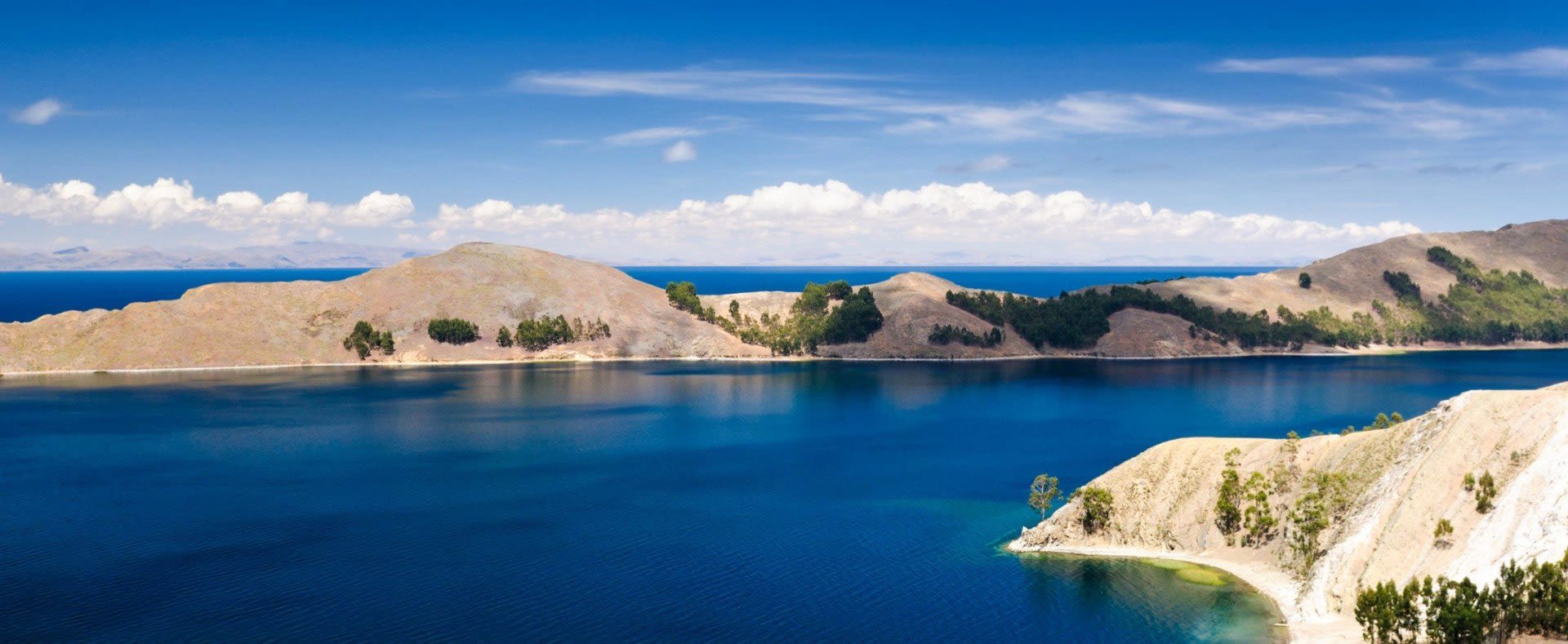
Bolivia is landlocked, and still there is fish. Lake Titicaca gives an abundant harvest of trout, though not a native one: trout arrived from North America in the 1930s, after a US fisheries survey, at the expense of the lake’s native fish. Order it fresh by Lake Titicaca. If your trip continues into Peru, our Peru food guide picks up at the border.
Our Highlights of Bolivia itinerary begins in Santa Cruz, includes lunch at the Tarabuco Sunday market outside Sucre, and closes with a night aboard a Lake Titicaca catamaran. Or let our Destination Consultants custom design your Bolivia trip around the salteña hour and a glass of singani in Tarija. Or start with our Bolivia tours.





