Most trips to Colombia start in Bogotá, so the first health question is the Bogotá altitude: the capital sits at about 8,660 ft (2,640 m), high enough that some travelers feel it on arrival. Our travel consultants are not medical professionals and cannot give medical advice. The US CDC advises seeing your doctor or a travel clinic at least a month before your trip.
According to the CDC, travelers who are not acclimatized can get altitude sickness at a sleeping altitude of about 8,000 ft (2,450 m), and sometimes lower. Bogotá is above that line. The CDC names headache as the main symptom, often with tiredness, dizziness or nausea. Its advice is to go up gradually, skip alcohol and keep exercise mild for the first 48 hours, and go down if symptoms get worse despite rest. Some travelers ask their doctor about acetazolamide, a prescription medicine the CDC names for speeding up acclimatization.
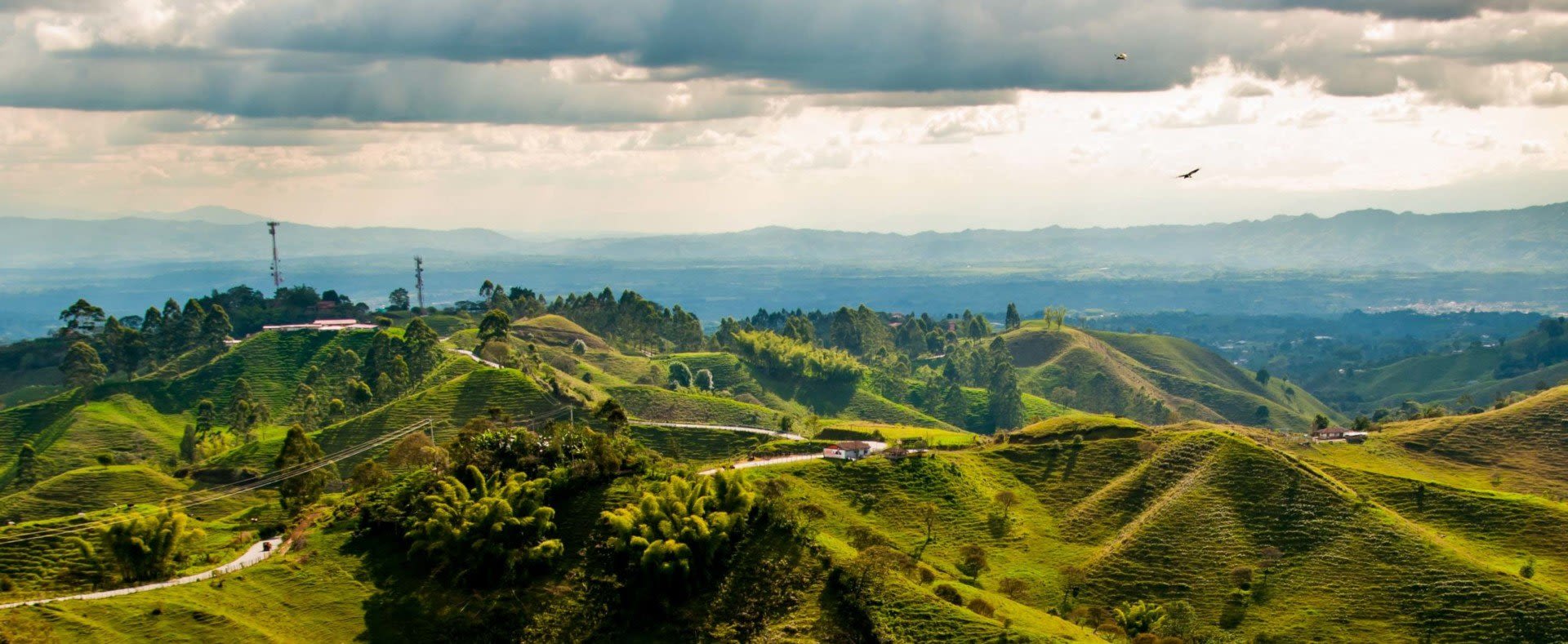
Our Bogotá to San Agustín itinerary keeps the arrival day to the hotel transfer and puts the city tour, with the cable car up Monserrate, on day two. The coffee region sits well below the capital.
| Place | Altitude |
|---|---|
| Monserrate, above Bogotá | 10,340 ft (3,152 m) |
| Bogotá | 8,660 ft (2,640 m) |
| Manizales | 7,090 ft (2,160 m) |
| Salento | 6,220 ft (1,895 m) |
| Armenia | 5,090 ft (1,551 m) |
| Medellín | 4,900 ft (1,495 m) |
| Pereira | 4,630 ft (1,411 m) |
| Villavicencio | 1,530 ft (467 m) |
| Cartagena | sea level |
Altitude matters twice: the CDC also draws its yellow fever and malaria advice for Colombia by altitude.
The CDC’s Colombia page recommends routine vaccines, including measles, plus hepatitis A for unvaccinated travelers aged 1 and older and hepatitis B for those under 60. It asks travelers to consider typhoid and to discuss rabies with their doctor, and notes an elevated chikungunya risk in Colombia.
Yellow fever. The CDC recommends the vaccine for travelers aged 9 months and older to most of the country, but not for travel limited to Bogotá, to areas above 7,550 ft (2,300 m), or to San Andrés and Providencia, and generally not for travel limited to Barranquilla, Cali, Cartagena or Medellín. As of November 2026, the CDC has a travel health notice for yellow fever in Colombia, with most cases in Tolima. Colombia’s Ministry of Health names Amazonas, Caquetá, Huila and Putumayo as the departments where yellow fever has circulated for decades. San Agustín is in Huila. Both the CDC and the Ministry say to get the vaccine at least 10 days before you travel.
The border and the parks. Sources differ on the entry rule. The CDC’s Colombia page lists a yellow fever certificate as required for arriving travelers aged 1 and older, while Colombia’s Ministry of Health, in its yellow fever emergency resolution (Resolución 691 of April 2025), treats vaccination for people entering the country as a recommendation. The CDC advises confirming entry rules with the embassy or consulate; our Colombia visa requirements page has the other entry rules. While that emergency lasts, the same resolution requires visitors to national parks in high- and very-high-risk areas to show a yellow fever certificate, with the shot given at least 10 days before the trip.
Malaria. The CDC lists malaria risk in areas below 5,600 ft (1,700 m) and none in the cities of Bogotá, Cartagena or Medellín. For travelers to certain areas it recommends prescription medicine to prevent malaria; whether you need it, and which one, is your doctor’s call.
The CDC lists dengue, chikungunya and Zika for Colombia, all spread by mosquitoes, and its global dengue notice treats dengue as a year-round risk in many parts of the world. Bogotá sits far above the CDC’s malaria line; the eastern plains around Villavicencio sit well below it. The CDC recommends an EPA-registered repellent with DEET, picaridin, IR3535, oil of lemon eucalyptus, para-menthane-diol or 2-undecanone, plus long sleeves and pants, and permethrin-treated clothing (never on skin).
The US CDC’s general advice for travelers is to choose factory-sealed drinks wherever tap water might be contaminated, and to skip ice where clean water is a concern. In restaurants, bottled water usually arrives sealed and the server opens it in front of you. To order a drink without ice, ask for it “sin hielo.” More on our Colombia food and drink page.
The CDC asks travelers to be especially careful with the sun at high elevation, Bogotá and Monserrate included. Some routes also run far from the big cities: San Agustín is a four to five hour drive from the airport at Neiva. Check medical and evacuation cover before you book; our Colombia travel insurance page covers the options.
About 8,660 ft (2,640 m), on a high plateau in the Andes. The cable car up Monserrate takes you to about 10,340 ft (3,152 m).
The US CDC’s general advice for travelers is to choose factory-sealed drinks wherever tap water might be contaminated, and to skip ice where clean water is a concern.
The CDC recommends it for most of the country, but not for travel limited to Bogotá, and generally not for Cartagena or Medellín alone. Entry rules differ between the CDC and Colombia’s Ministry of Health; see above and confirm with the embassy or consulate.
Manizales sits at about 7,090 ft (2,160 m) and Pereira at about 4,630 ft (1,411 m), both in the coffee region and well below Bogotá.





