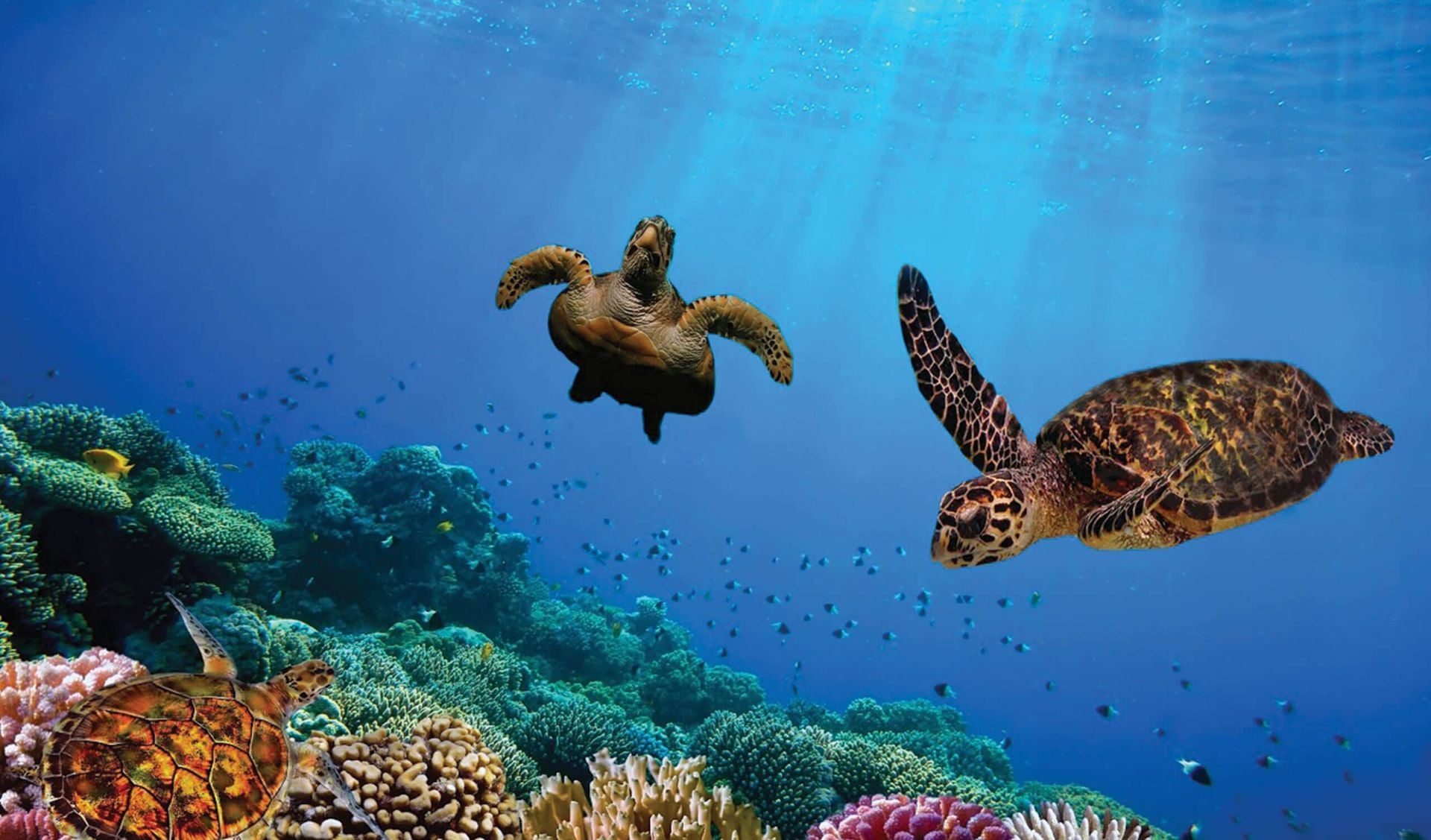

From December to May, as temperatures and rainfall increase, vegetation on the Galapagos Islands is particularly fresh and green and animals that feed on this new growth are found taking advantage of this time of abundance, including iguanas and tortoises. This is also the time that many land bird species begin nesting. This is the ideal time for snorkeling and diving. Highlights of this period include giant tortoises hatching out, marine iguanas nesting, and green sea turtles laying their eggs. Waved albatross arrive in large numbers and mate in April.
During the warm, humid season in the Galapagos Islands, there is plenty of both sun and rain. Ocean currents bring warm water from the north at this time raising water temperatures around the islands. At the same time, the air warms and there are regular downpours, usually short and sharp. The islands do not get as wet as other tropical regions of South America, and the showers can provide a welcome cooling down during hot afternoons. Winds are gentle at this time meaning this is the time of year with the calmest seas in the Galapagos.
In December observe green sea turtles mating and the start of giant tortoises hatching. Land birds such as Masked Boobies start to nest as the rains begin. Sea lions and iguanas breed. January and February are the best months to snorkel with penguins, tortoises lay eggs and Red-footed and Masked boobies can be seen breeding and nesting. Land iguanas start mating and green sea turtles nest. In April, flamingos breed and nest as do Waved Albatross. The warm, humid season is definitely the best season to spend time in the water and taking a cruise of the Galapagos Islands at this time is ideal as the sea is at its calmest.

During the cooler, drier months in the Galapagos Islands, the sea is particularly rich in plankton giving seabirds including penguins and albatross plenty of food. The sea gets choppy at this time, especially in August and September. If snorkeling or diving, a wetsuit is recommended though water temperatures are rarely below 20C / 68F. More strenuous activities such as mountain biking or kayaking can be good at this time of year taking advantage of the lower temperatures. There are plenty of wildlife highlights at this time of year, at least as good as during the warm, humid season.
The Humboldt Current is particularly pronounced during the dry season and brings cold, nutrient-rich waters up to the Galapagos Islands from further south. There is often a mist (garúa) on the islands, especially in the mornings and in the highland interior of the islands. Despite being drier, sunshine is lower at this time of year, hence the lower temperatures. The tradewinds bring choppier seas.
In June, watch giant tortoises move from the highlands towards the coast seeking out prime nesting sites. In July sea lion pups can be seen throughout the islands and Red-footed boobies start to nest. In August Blue-footed boobies perform their famous mating dances and whales and dolphins are frequently spotted going into September and October. While the water is not at its warmest, there is a lot to see when snorkeling at this time. Waved albatross nest at this time and sea lions and short-eared owls breed.


