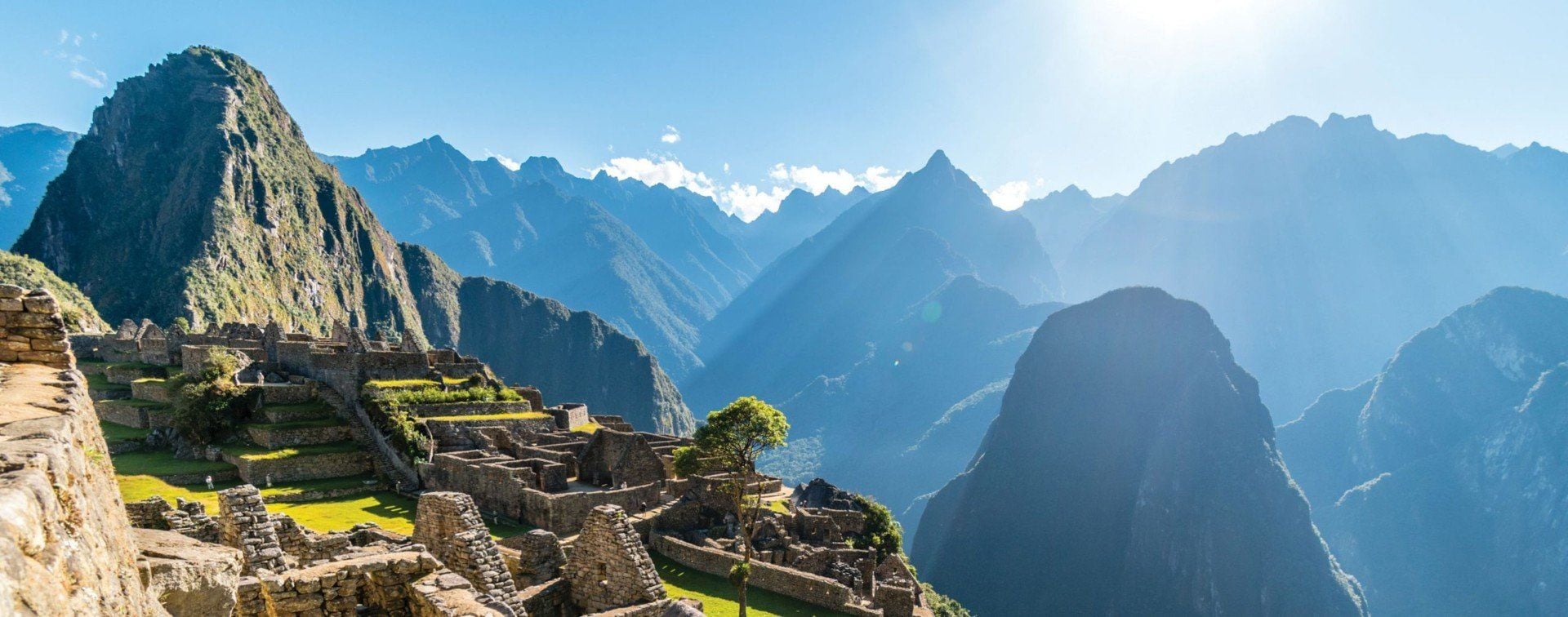
Machu Picchu sits on the edge of the Andes, where the mountains start to fall away towards the Amazon Rainforest. UNESCO puts the citadel at 2,430 m (7,970 ft), in tropical mountain forest at the meeting point of the Peruvian Andes and the Amazon Basin. That position decides its weather. It is warmer than Cusco, cooler than the Amazon Basin, and a good deal wetter than most visitors expect.
Warmer than Cusco needs one correction, though. By day the two are almost the same, around 70°F (21°C) in every season. The difference is the nights, which stay near 50°F (10°C) at Machu Picchu while Cusco drops below freezing in July, and the rain: about three times as much falls at Machu Picchu.
SENAMHI, Peru’s national weather service, has a station at Machu Picchu, at 2,563 m (8,410 ft), and has published its averages by season, not by month: rain for 1971–2000, highs for 1965–2006, lows for 1965–2000. These are the most recent published averages we found for the station. Cusco is SENAMHI’s Granja Kcayra station, the 1991–2020 normals from our Peru weather guide, averaged by season. SENAMHI’s own Cusco figures for the older periods tell the same story. Rain is per month.
| Season | Machu Picchu high | Machu Picchu low | Machu Picchu rain per month | Cusco high | Cusco low | Cusco rain per month |
|---|---|---|---|---|---|---|
| December–February | 68°F (20°C) | 52°F (11°C) | 11.4 in (290 mm) | 69°F (20°C) | 45°F (7°C) | 5.1 in (129 mm) |
| March–May | 70°F (21°C) | 51°F (11°C) | 7.3 in (186 mm) | 70°F (21°C) | 39°F (4°C) | 1.8 in (46 mm) |
| June–August | 71°F (22°C) | 48°F (9°C) | 2.2 in (55 mm) | 70°F (21°C) | 31°F (−1°C) | 0.2 in (4 mm) |
| September–November | 71°F (22°C) | 52°F (11°C) | 5.5 in (139 mm) | 72°F (22°C) | 41°F (5°C) | 1.7 in (43 mm) |
| Whole year | 70°F (21°C) | 51°F (10°C) | 79 in (2,010 mm) a year | 70°F (21°C) | 39°F (4°C) | 26 in (666 mm) a year |
The afternoons barely differ. The nights and the rain do: in its driest season, one month at Machu Picchu brings more rain than Cusco gets in June, July and August together.
Machu Picchu lies about 2,600 ft (800 m) lower than the Cusco station, on the side of the Andes that faces the Amazon. Moist air from the Amazon and the Atlantic flows in from the east, runs into the mountain wall and is pushed upward, which sets off heavy rain. SENAMHI calls the Machu Picchu area one of the rainiest parts of the Urubamba basin.
The sanctuary’s master plan, from Peru’s protected-areas service SERNANP and the Ministry of Culture, describes steep, thickly forested slopes, humidity of 80–90% and very heavy cloud, typical of cloud forest. That cloud keeps the nights mild: in the rainy months, SENAMHI notes, moisture and cloud stop the air from cooling after dark. Even June to August, the coldest season, averages a low of 48°F (9°C), against 31°F (−1°C) in Cusco.
Further down, the real heat starts: Puerto Maldonado, in Peru’s southern Amazon, averages highs of 84–90°F (29–32°C). For the rest of the country, see our Peru weather guide.

Machu Picchu has the two seasons of the southern Andes, only wetter. December to February is the wettest stretch, about 11 inches (290 mm) a month, and the master plan describes heavy rain from January to March. At stations below 2,600 m like this one, SENAMHI counts October to April as roughly 85% of the year’s rain.
The dry season runs from April to August by the master plan’s count, and June to August is the driest quarter in SENAMHI’s figures. Dry is relative here. Those three months still average about 2 inches (55 mm) of rain each, where Cusco gets almost none.
You may read that May to September brings clear skies. Partly right. Rain is lowest from June to August, but September to November averages 5.5 inches (139 mm) a month, and by October, SENAMHI found, moist northeast winds bring so much cloud that Machu Picchu’s warmest days fall in May and August, not in October as higher up the valley.
Which month suits your trip is a question for our guide to the best time to visit Machu Picchu. Visits are possible and worthwhile year-round.

Peru’s Ministry of Culture closes the Inca Trail network to Machu Picchu in February for maintenance, under the regulation that governs the trails. In 2025 the closure ran from February 1 to 28, and in 2026 the trails reopened on March 1. A hard rainy season can stretch it: after intense rain and landslides in early 2025, SERNANP and the Ministry kept every route closed until March 15, and Peru’s state news agency Andina reported a further extension to March 31. If the trek is the point of your trip, avoid February and keep March flexible.
PeruRail usually closes its Poroy station outside Cusco from around January until April, citing the weather and the risk of landslides, while it reinforces the track. Vistadome and Expedition passengers then take a bus from Wanchaq station in Cusco to Ollantaytambo, or Pachar on some departures, and board the train there.
The valley is steep, and heavy rain moves it: the master plan records mudflows that reached the town below Machu Picchu in April 2007 and February 2010, and one in April 2004 that destroyed part of the town and the railway. In the wet months, leave slack around the train.
Pack a rain jacket in any month, since it rains in every season here, and light layers for afternoons around 70°F (21°C). Lows here run 48–52°F (9–11°C), so bring one warm layer; Cusco’s nights need more. Wet stone steps get slick, so wear shoes with grip. The full list is on our Machu Picchu packing list, and our guide to things to do at Machu Picchu covers the visit itself.
Tell us your dates when you ask about a custom Machu Picchu trip, so the season shapes the plan from the start: a train visit in the wet months, or the trek in the dry ones. Or browse our Machu Picchu tours.





